Source Handheld Household Steam Mop for Hotel, Commercial, and Household Use
Find 30 verified handheld household steam mop options from verified manufacturers in Suzhou and Ningbo. Compare specifications like power, water tank capacity, and steam preparation time to select the ideal unit for hotel, commercial, or household cleaning needs.
Key considerations
Products List





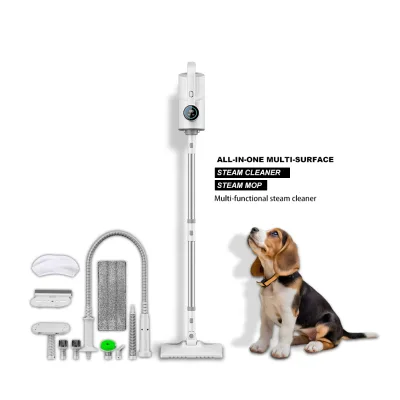
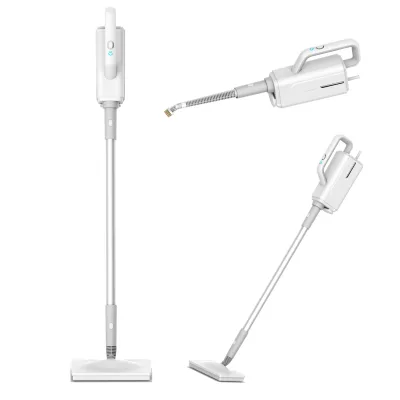


Comprehensive Sourcing Guide
Strategic Sourcing Guide for Handheld Household Steam Mops
The global demand for chemical-free cleaning solutions has elevated the handheld household steam mop from a niche novelty to a staple in B2B procurement catalogs for home goods, retail chains, and hospitality suppliers. For procurement professionals, sourcing these devices requires a disciplined approach that balances technical performance with regulatory compliance and supply chain reliability. This guide outlines the critical factors for evaluating handheld steam mops, drawing on observed market data and technical specifications to ensure a robust sourcing strategy.
Technical Specifications and Performance Metrics
When evaluating handheld steam mops, the primary focus must be on the core technical parameters that dictate cleaning efficacy and user safety. The observed market data indicates a significant variance in power consumption, with units ranging from 1100W to 1500W. A higher wattage generally correlates with faster steam generation and higher steam output, which is essential for tackling stubborn stains in commercial or heavy household environments. Buyers must verify the specific wattage of the unit they intend to procure, as a 1100W model may suffice for light residential use, while a 1500W unit is better suited for commercial applications like hotels or large-scale cleaning operations.
The water tank capacity is another critical specification that directly influences operational efficiency. Data points show capacities varying between 350ml and 400ml for standard handheld models, with some specialized units featuring smaller sewage tanks of 80ml for specific wet-dry applications. A larger water tank reduces the frequency of refills, which is a key productivity metric for professional cleaners. However, buyers should note that increased capacity often adds weight to the unit, potentially affecting maneuverability. The steam preparation time is equally vital; observed ranges span from 20 seconds to 50 seconds. For time-sensitive commercial contracts, a unit with a 20-second heat-up time offers a distinct operational advantage over slower models.
Power source and voltage compatibility are non-negotiable for international procurement. The market data confirms that most units operate on electric power sources with a rated operating voltage of 120V/220-240V AC, supporting a frequency of 50-60Hz. This dual-voltage capability is essential for exporters targeting multiple regions. Furthermore, the cable length is a frequently overlooked but critical ergonomic factor. Specifications observed in the market include lengths of 3m, 5m, and 6m. A longer cable reduces the need for frequent unplugging and repositioning, significantly improving the user experience in large rooms.
Compliance and Certification Verification
Navigating the regulatory landscape is a primary responsibility for B2B buyers. The handheld steam mop market is subject to strict safety and environmental standards, particularly in North America and the European Union. The observed product data highlights a robust set of certifications, including EMC, GS, CE, RoHS, CB, ETL, and ISO CQC. These certifications are not merely marketing badges; they represent verified compliance with electromagnetic compatibility, electrical safety, and hazardous substance restrictions.
Buyers must rigorously verify that the specific model they are sourcing holds the necessary certifications for their target market. For instance, the ETL mark is often required for entry into the United States, while CE is mandatory for the European Economic Area. The presence of RoHS certification ensures that the product does not contain restricted hazardous materials, a requirement that is increasingly enforced globally. Additionally, the GS mark indicates a comprehensive safety test by a German body, which is highly regarded for its rigor. Procurement teams should request valid test reports and certificates of conformity for each batch, ensuring that the certifications apply to the specific model number, such as PR-361, PR-357, or WD02, rather than a generic product line.
Cost Drivers and Pricing Dynamics
Understanding the cost structure of handheld steam mops is essential for negotiating favorable terms and maintaining healthy profit margins. The observed price range in the market spans from $1 to $100 USD, a wide variance that reflects differences in build quality, power output, and included accessories. Several factors drive these costs. First, the material composition plays a significant role; units constructed from high-grade ABS and PP plastics offer better durability and heat resistance compared to lower-quality alternatives. The inclusion of a color box and yellow cardboard box for packaging, as noted in specific models, adds to the unit cost but enhances retail presentation.
The manufacturing origin also influences pricing. Products originating from established manufacturing hubs like Suzhou and Ningbo often benefit from mature supply chains and economies of scale, which can stabilize pricing. However, the complexity of the internal components, such as the boiler power (ranging from 1100W to 1400W) and the steam control mechanisms, creates a tiered pricing structure. Buyers should be wary of prices at the extreme low end of the spectrum, as they may indicate compromises in safety features or material quality. Conversely, higher-priced models typically offer longer runtimes, such as 25 minutes compared to 20 minutes, and more advanced features like adjustable steam control and surface compatibility for both hardwood and carpet.
Typical Applications and Market Segmentation
Handheld steam mops serve a diverse range of applications, from residential households to commercial hospitality settings. The observed product attributes list applications in hotels, commercial spaces, and households, indicating a versatile product category. In the residential sector, the focus is on convenience and chemical-free cleaning for hard surfaces. The ability to sterilize at 100℃ makes these units ideal for families with children or pets, as the high-temperature steam effectively kills bacteria and allergens without the need for harsh detergents.
In the commercial sector, the requirements shift towards durability and efficiency. Hotels and cleaning services require units that can handle high-volume cleaning tasks with minimal downtime. The specific model PR-372, which includes the function "Clean The Car," suggests a niche application in automotive detailing, highlighting the versatility of steam technology. The surface compatibility for hardwood and carpet further expands the utility of these devices in mixed-surface environments. Procurement strategies should align the selected model with the specific use case; for example, a model with a 6m cable and 1500W power is more suitable for large hotel lobbies than a compact 3m, 1100W unit designed for small apartments.
Supplier Evaluation and Quality Control
Selecting the right supplier is as critical as selecting the right product. Buyers should prioritize suppliers who demonstrate transparency in their manufacturing processes and quality control measures. The observed data indicates that customization is available, allowing buyers to tailor products to their brand requirements. However, this flexibility must be balanced with strict quality assurance protocols. Suppliers should provide clear documentation on the production process, including material sourcing and assembly standards.
Quality control should extend beyond the final inspection. Buyers must verify that the supplier conducts rigorous testing on critical components, such as the heating element and the steam generation system. The runtime and steam preparation time are key performance indicators that should be tested under real-world conditions. Additionally, the warranty period, observed as 1 year in the market data, serves as a baseline for supplier confidence. A supplier willing to offer a standard one-year warranty demonstrates a commitment to product reliability. Buyers should also evaluate the supplier's capacity to handle order volumes, noting that the observed MOQ ranges from 1 to 2000 units, which offers flexibility for both small startups and large distributors.
Long-Term Procurement Considerations
Sourcing handheld steam mops is not a one-time transaction but a long-term partnership that requires careful planning. The standard dimensions and packaging specifications, such as the 4521115cm standard for certain models and the 235x300x1150mm standard for others, are crucial for logistics planning. Buyers must calculate the container load and shipping costs based on these dimensions to optimize freight expenses. The unit packing weight, observed at 3.37kg gross weight and 2.2kg net weight, is another factor that impacts shipping calculations and storage requirements.
Furthermore, the availability of spare parts and after-sales support is a vital long-term consideration. As these devices involve electrical components and moving parts, wear and tear is inevitable. A reliable supplier should offer a supply chain for replacement parts, such as steam heads, water tanks, and heating elements. The customization options available in the market also suggest that suppliers can adapt to changing market trends, such as new surface compatibilities or energy efficiency standards. Buyers should establish clear communication channels with suppliers to address any potential issues promptly and ensure a steady supply of high-quality products that meet evolving consumer expectations.
Comparative Analysis of Key Models
To assist in decision-making, the following table summarizes the key technical differences observed among specific models in the market. This comparison highlights the trade-offs between power, capacity, and runtime, enabling buyers to select the most appropriate model for their specific needs.
| Model Number | Power (W) | Water Tank Capacity | Steam Prep Time | Runtime | Cable Length | Primary Application |
|---|---|---|---|---|---|---|
| PR-361 | 1100W | 350ML | 50s | N/A | 6m | Household, Hotel |
| PR-357 | 1300W | 400ml | 30s | 20min | 3m | Commercial, Household |
| PR-372 | 1125W/1425W | N/A | 20s | N/A | N/A | Car, Household |
| WD02 | 1100W/1400W | 80ml (Sewage) | N/A | N/A | N/A | Specialized Cleaning |
This table illustrates that while the PR-357 offers a robust balance of power and runtime, the PR-372 excels in speed with a 20-second preparation time. The WD02 model, with its small sewage tank, appears designed for specific wet-dry applications rather than general floor cleaning. Buyers should use this data to align their procurement choices with the specific operational requirements of their end-users. By carefully analyzing these specifications, procurement professionals can build a resilient supply chain that delivers high-performance steam mops to the market.
FAQs
What certifications do these steam mops hold?
These handheld steam mops hold EMC, GS, CE, RoHS, CB, ETL, and ISO CQC certifications. Buyers must verify that the specific model number, such as PR-361 or WD02, carries the required marks for their target market before procurement.
How long does the steam preparation time take?
Steam preparation times range from 20 seconds to 50 seconds depending on the model. Faster models like the PR-372 heat in 20 seconds, offering a distinct advantage for time-sensitive commercial cleaning contracts over slower units.
Which power wattage options are available for these units?
Available power ratings include 1100W, 1300W, 1500W, and dual ratings like 1125W or 1425W. Higher wattage generally correlates with faster steam generation, making 1500W units better suited for heavy commercial applications like hotels.
Can buyers customize the product packaging and features?
Customization is available for these steam mops, allowing buyers to tailor products to their brand requirements. Packaging options include color boxes or combinations with yellow cardboard boxes, though specific material and feature changes require supplier confirmation.
What is the typical water tank capacity for these mops?
Water tank capacities typically range from 350ml to 400ml for standard handheld models. Some specialized units feature smaller sewage tanks of 80ml, so buyers should verify the specific capacity to ensure it meets their operational refill needs.
How long is the warranty period for these devices?
The standard warranty period observed in the market is one year. This baseline warranty demonstrates supplier confidence in product reliability, though specific terms may vary by manufacturer and should be confirmed during the sourcing negotiation process.